





M&A Advisory for Selling Your Technology Company

M&A Advisory: Maximizing Exit Value for Startups & Shareholders
Roemer Capital advises founders and shareholders of technology companies on selling their company or their shares, from valuation to closing. A sale usually takes 6 to 12 months, and we generally aim for six months. The fee is a fixed monthly amount plus a success fee that is only due on a sale and depends on the purchase price achieved.

Working with top companies around the globe















When do founders need an M&A advisor?
As soon as selling your company needs more time, knowledge and negotiating power than is left beside running the business. This applies to a full sale as much as to a partial sale or the search for a strategic partner. An M&A advisor prepares the company, brings in several interested buyers and leads the negotiation. So you sell to the right buyer, not just the first one.
Typical reasons for selling a company
Often a strategic buyer gets in touch unexpectedly, for example for a trade sale to a company in the same industry. Sometimes investors want to sell their shares and push for an exit. Or the company has reached a point where a new owner with more resources can grow it faster. Succession can also be the reason. If you spot these signals early, you sell from a position of strength, not under time pressure.

What an M&A Advisor Does in a Company Sale
An M&A advisor takes the work of the sale process off your hands, so you can keep running your company. They turn your results into figures and arguments that buyers can test, and they create competition between several interested parties. The process stays confidential: buyers only learn your name after signing a non-disclosure agreement.
Act, Don't React
You decide the timing and the process instead of reacting to a single buyer's offer.
Relief in Day-to-Day Business
We handle documents, buyer outreach and coordination. You stay focused on your business.
Competition Between Buyers
Several interested buyers at the same time strengthen your position on price and terms.
Our M&A Advisory Services
We support the sale from the first valuation to closing. Our processes are modelled on the DIN EN ISO 9001 standard, and you can see the status at any time in our client portal, Roemer Capital OS. Tax and legal questions are handled by your tax adviser and your law firm, and we coordinate with both. Roemer Capital is neither a law firm nor a tax adviser.

Exit Readiness Check
We review metrics, cap table, contracts and your equity story against what buyers want to see. You then know what to improve before the sale.

Structured Buyer Outreach
We prepare an anonymous blind profile, a longlist and a shortlist of suitable buyers. Then we approach strategic buyers, financial investors and family offices confidentially.
Valuation
We set a realistic valuation range using revenue and EBITDA multiples and comparable transactions.

Data Room and Due Diligence
We set up the data room to our standard within 24 hours and steer the buyer's due diligence through to the purchase agreement.
Negotiation to Closing
We negotiate the letter of intent (LOI), the purchase price mechanism and the terms, and support signing and closing. Your law firm drafts the purchase agreement.
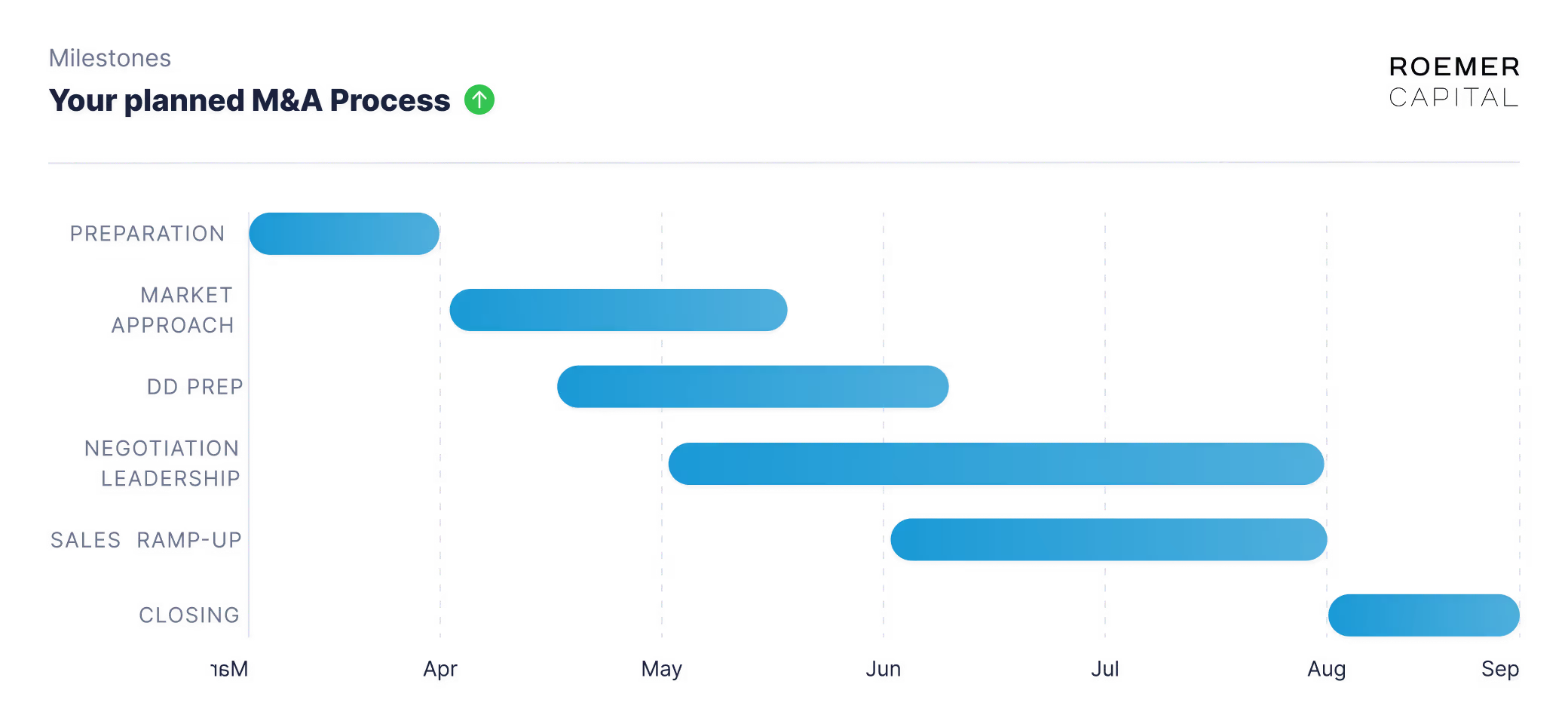
From First Call to Closing in 6 to 12 Months
Analysis
After a confidential first call, we assess how ready you are to sell, set the valuation range and prepare the blind profile and data room.
Buyer Outreach
We approach the buyers on the shortlist confidentially, sign non-disclosure agreements and collect offers and letters of intent.
Closing
We support due diligence, the purchase agreement negotiation, signing and closing, until the purchase price is paid.
The fee has two parts: a fixed monthly amount and a success fee. The monthly amount covers the work a sale needs over several months. The success fee is only due on a sale and depends on the purchase price achieved. Both amounts are in the written offer before the mandate starts. We do not bill by the hour and do not work on success fee alone.
FAQs
Still have questions? Book a meeting and let's talk.
What does an M&A advisor do in a company sale?
They work out the exit strategy with you, prepare the sale, find suitable buyers and lead the negotiation through to closing. With us, that means valuation, blind profile, longlist and shortlist, data room, due diligence, letter of intent (LOI), signing and closing. You stay focused on your business throughout.
How long does it take to sell a company?
With us, usually 6 to 12 months from the start of the mandate to closing, and we generally aim for six months. How fast it goes depends mainly on preparation. Clean figures, an orderly cap table and a complete data room speed up every step.
What are the steps of a company sale?
There are three phases: preparation, buyer outreach and negotiation through to closing. First come the valuation, the blind profile and the data room. Then we approach buyers confidentially, collect offers and negotiate the letter of intent, due diligence and purchase agreement through to signing and closing.
How much do M&A advisors charge?
With us, a fixed monthly amount plus a success fee that is only due on a sale and depends on the purchase price achieved. Both amounts are in the written offer before the mandate starts. We do not bill by the hour, do not work on success fee alone and publish no price list.
Who is Roemer Capital's M&A advisory for?
For founders and shareholders of technology companies with a product in the market and running revenue who want to sell all or part of the company, sell shares or arrange a succession. Companies that grew without outside investors can be sold as well.
When is the right time to sell a company?
When the company is growing, the metrics are stable and buyers show strategic interest, not during a period of standstill. Talk to us as soon as a sale becomes an option or a buyer gets in touch. That leaves time to improve structure and figures in a targeted way. If growth capital is the better option, we also advise on funding rounds.
How is a company valued for a sale?
Through multiples of revenue or EBITDA, meaning earnings before interest, tax, depreciation and amortisation, and through comparable transactions. For technology companies, growth, recurring revenue and unit economics weigh heavily. The result is a valuation range; competition between buyers sets the price.
What role do investors play in a sale?
Investors usually have to approve the sale and they influence timing, structure and how the proceeds are split. Terms such as the liquidation preference and drag-along rights decide who receives how much and who must sell alongside. That is why we align with all shareholders early.
How is an M&A advisor different from a business-for-sale platform, a bank or a law firm?
A business-for-sale platform lists your company online and leaves the rest to you. Large banks and audit firms usually offer transaction advice as part of a broad range of services. A law firm drafts the purchase agreement and liability terms, which complements our work. We are an independent boutique and run the whole sale process ourselves.
What are common mistakes when selling a company?
Starting too late, unrealistic price expectations, an unclear cap table and only one interested buyer. Figures that do not hold up in due diligence are another. Most of these mistakes can be avoided with preparation, for example with a fractional CFO who gets your figures ready before the sale.
What do I gain from M&A advisory?
Several buyers at the same time, a reasoned valuation and a process that does not stall your day-to-day business. This strengthens your position on price and terms. We do not guarantee a specific price or a sale.
Who is Roemer Capital?
Roemer Capital GmbH is an independent fundraising and M&A advisory boutique based in Düsseldorf, Germany. It advises technology companies with a product in the market and running revenue on funding rounds from EUR 1 million (Series A to C), company sales and as a fractional CFO. Lucas E. Roemer, author of the book "Kapital folgt Struktur", founded the company in July 2023. It is not connected to companies with the same or similar names in other countries.