Capital Follows Structure: The Handbook for Growth Financing and Capital Raising

Whether you're refining your pitch, planning your fundraising strategy, or scaling your business: we're here to help.






Capital follows structure, not luck
From the outside, fundraising and capital raising often look like timing and network. From the inside, something else decides outcomes: structure. Teams that prepare Discovery, open company valuation only when the narrative holds, and run the funding round like a project raise more reliably. Teams that rely on spray-and-pray emails stretch the same loop by months. For tech startups, that is the difference between growth financing and a burned market.
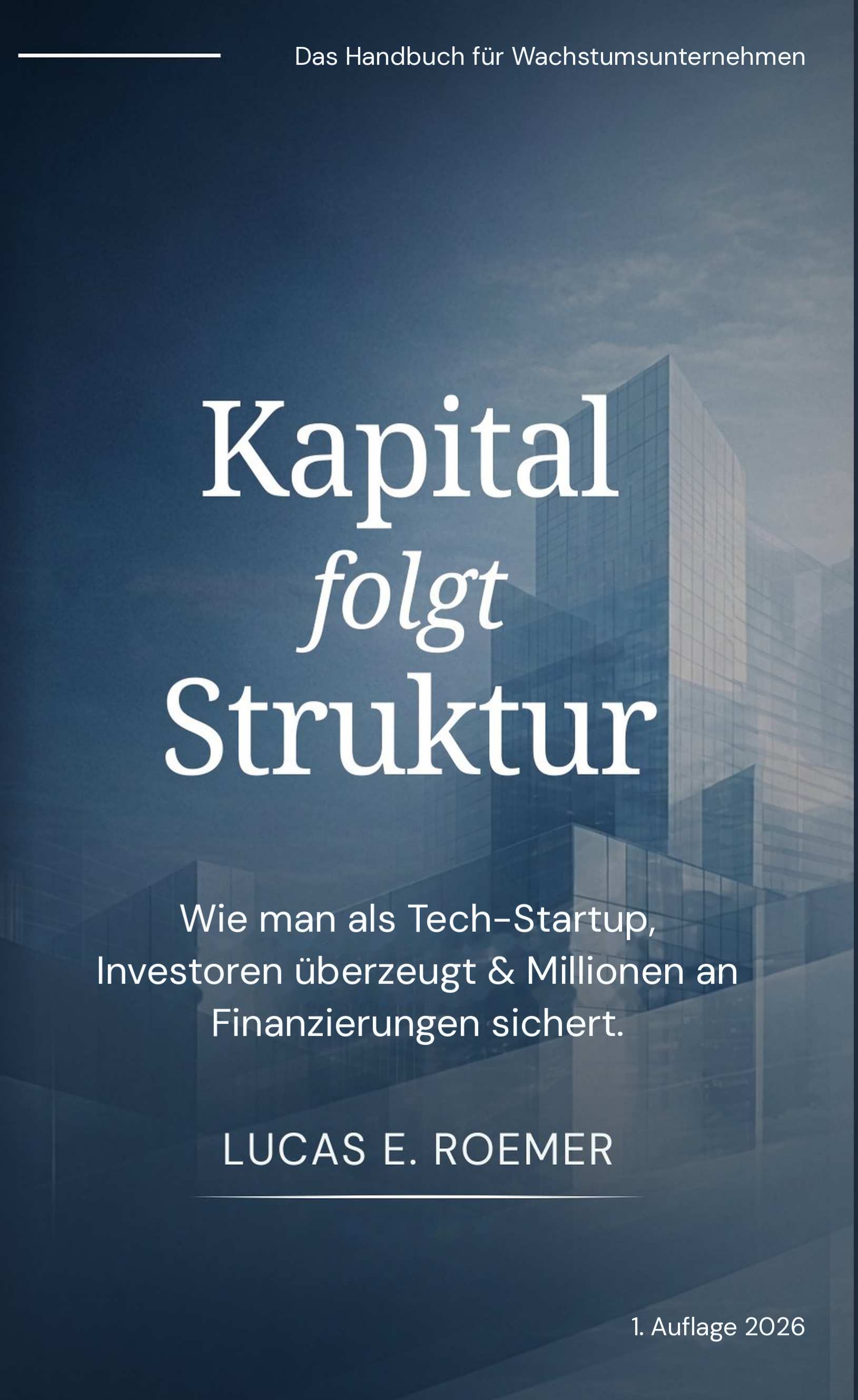
That thesis drives the capital handbook Kapital folgt Struktur (Capital Follows Structure) by Lucas E. Roemer. It is not a motivation book. It is a practical frame for growth companies that want to prepare and sustain investor conversations without sacrificing day-to-day operations.
We at Roemer Capital see the same break in mandates: strong products, weak process leadership. The book turns that experience into a guide you can read alone and then apply operationally.
View Capital Follows Structure on Amazon
Why preparation beats spray-and-pray
A fundraising process typically takes several months. With the wrong approach it easily becomes 12 to 18. Most founders do not fail because of the product. They fail because of valuation anxiety or because they try to do everything on the side.
The handbook and Roemer Capital analysis put the reality without gloss:
- Most investor conversations end before they have really begun.
- Founders who fail in Discovery rarely get a second chance with the same investor.
- Founders who prepare for three months or longer get much further than those who start four weeks before.
The message is simple: you do not win by sending more cold emails. You win because conversations have substance as soon as they start. Structure is the lever. Luck is the excuse when structure is missing. Outreach without prep only multiplies polite declines.
What "structure" means in fundraising
Structure is not a folder tree. Structure means:
- Clear need: how much capital for which period and which use of proceeds?
- Consistent materials: pitch deck, forecast, and data room tell the same story.
- Prioritized investor map: fit before volume. Not every fund belongs on the longlist.
- Discovery discipline: Q&A log, follow-ups, no chaos between calls.
- Valuation at the right time: substance first, price discussion second.
Investors do not invest in ideas. They invest in the probability that an idea will be executed successfully. Structure makes that probability visible. Without it, even strong traction looks accidental.
Structure also protects your team. Fundraising eats management attention. When roles, deadlines, and version control are missing, sales and product suffer first. A good handbook makes those side effects plannable instead of surprising.
How the handbook helps with Discovery and valuation
The book walks you through the stations where rounds fail or win. You get a frame to prepare Discovery so conversations do not die after 20 minutes. You learn why valuation anxiety is the silent killer of successful rounds, and how to open the price discussion only once structure holds.
In practice that means:
- You know which materials investors actually need and what you can leave out.
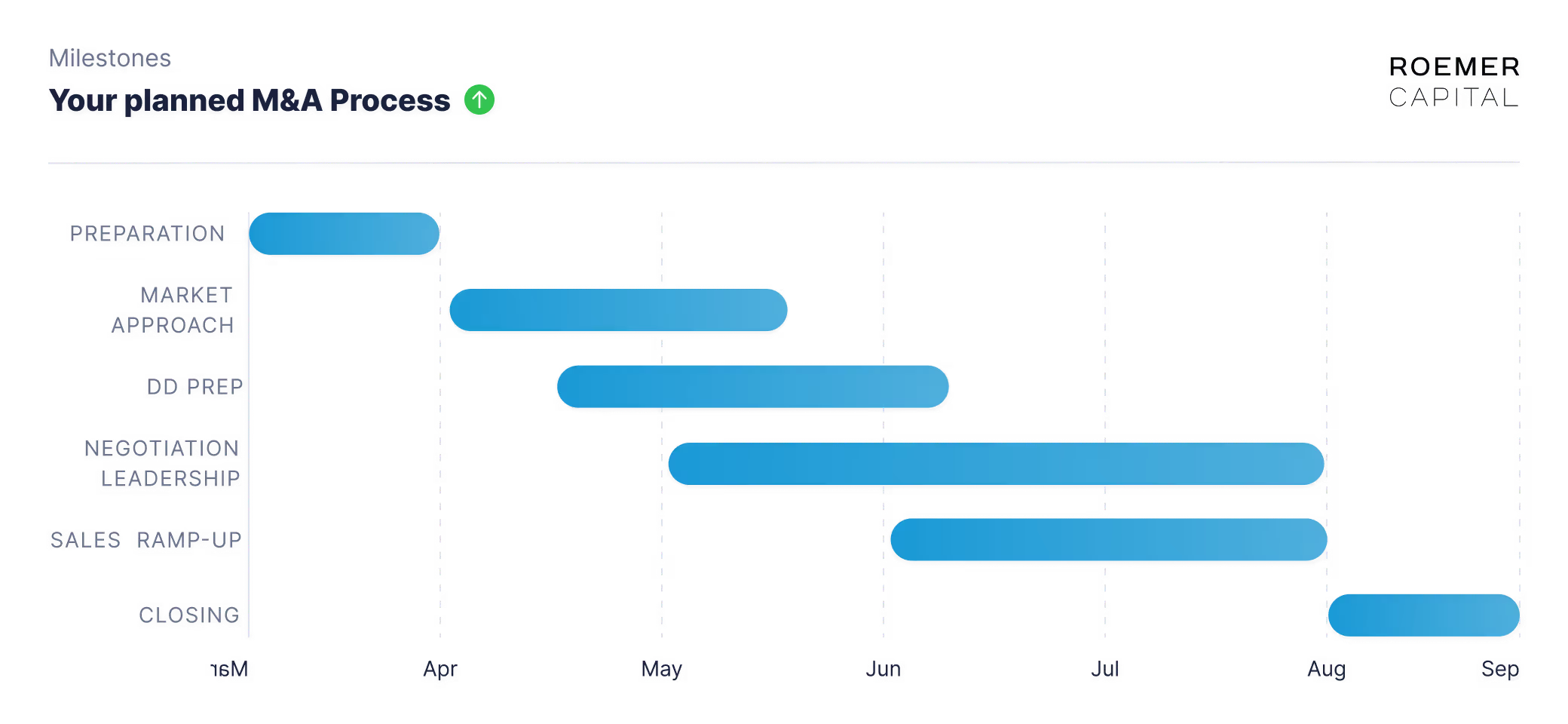
- You build a process for 4 to 8 months that remains workable beside the core business.
- You separate prep, soft Discovery, and hard negotiation instead of mixing everything in parallel.
- You enter conversations about equity with clearer financial planning and ownership logic.
- You spot earlier when an investor type is a mismatch, instead of investing weeks in the wrong diligence path.
Raising capital is not a side project. The handbook removes that illusion and replaces it with a sustainable cadence. That is the difference between "we are talking to investors" and "we are running a round."
From reading to process: how to apply it
Reading alone does not close a round. Use the book as briefing, then move operationally:
- Translate chapters into sprints. One module per week: need, numbers room, narrative, investor map, data room.
- Run the checklist in parallel. For the operational prep backlog, the investor readiness checklist complements the handbook well.
- Start soft calls only after basics are green. Otherwise you burn second-chance slots.
- Prepare valuation, but do not force it. When diligence questions arrive, you should have answers before you debate multiples.
- Weekly review. 45 minutes is enough: open items, investor status, next deliverables.
For a broader instruments frame, also see our capital raising guide. Book, checklist, and guide interlock: mindset, prep OS, overview. Used together, they replace gut feeling with process.
Common traps the book addresses
- Starting outreach without a solid numbers room.
- Running valuation as an ego topic before Discovery has seen substance.
- Too many parallel conversations without prioritization and a follow-up system.
- Overloading materials instead of focusing: investors want clarity, not volume.
- Treating fundraising as "on the side" and then wondering why due diligence spins out of control.
- Rewriting the whole narrative after the first decline instead of looking for patterns in feedback.
Each trap costs time and credibility. Structure does not reduce them to zero, but it reduces them meaningfully. It also makes feedback usable, because you create comparable conversation quality.
Who the capital handbook is for
For tech startups and scaleups that want to raise and already have traction or a clear path to revenue. For teams that treat fundraising as a leadership job, not a weekend project. It is less suited as a substitute for an operating mandate: the book is a handbook. Live process support is what we provide at Roemer Capital through fundraising, M&A, and Fractional CFO mandates.
If you think from pre-Series A to exit and already generate revenue, the fit is especially high. You do not need a hype cosmos. You need clarity, cadence, and negotiating strength.
Bottom line
Capital follows structure. Not the loudest pitch and not the longest email blast. If you want to prepare capital raising, growth financing, and company valuation as a tech startup, the capital handbook is the right entry point.
Order "Kapital folgt Struktur" on Amazon now
If you then want to orchestrate the process with us, from prep to close, we are happy to book a strategy call.
Book a strategy call on fundraising and capital structure
FAQs
Here you can find the important questions.